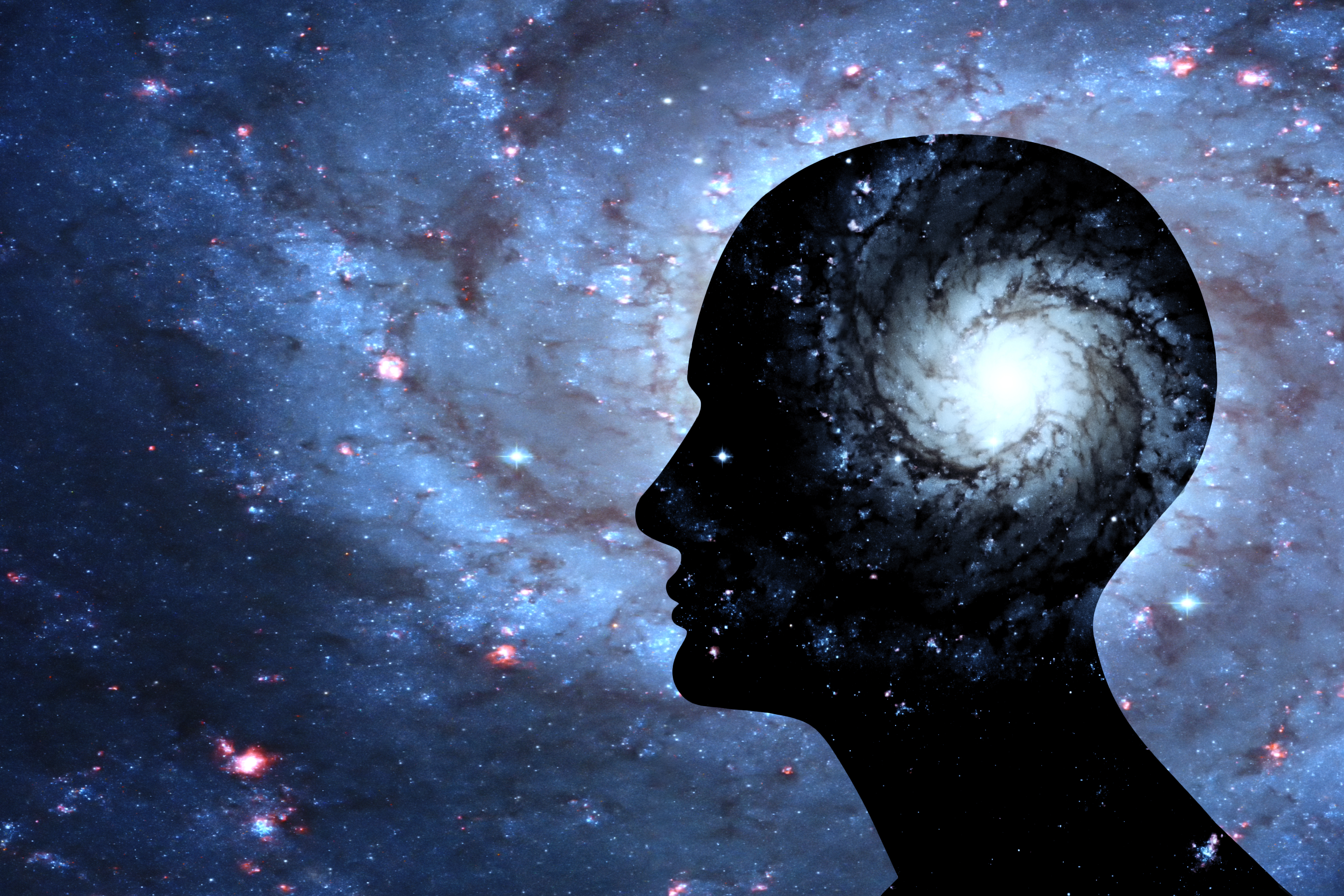
What if every moment you’ve ever experienced was already slipping into the past before you even realized it? Imagine watching a live stream of your life—except it’s not quite live. Instead, it’s delayed by a fraction of time, like watching a show buffering just slightly behind reality. According to new research, this isn’t just a quirky thought experiment—it’s how your brain processes vision.
Join a community of 14,000,000+ Seekers!
Subscribe to unlock exclusive insights, wisdom, and transformational tools to elevate your consciousness. Get early access to new content, special offers, and more!
Scientists have uncovered a fascinating truth: everything you see happens about 15 seconds after it actually occurs. This isn’t a glitch but a sophisticated survival mechanism. Your brain smooths out the chaos of reality, creating a stable, seamless perception of the world. But what does this mean for how we understand time, reality, and even ourselves?

The Science of Vision: How We See the World
Our eyes might function as the entry points to reality, but it’s the brain that stitches together the images we perceive. When light enters the eye, it travels through the intricate structures of the retina, a thin layer of tissue filled with millions of photoreceptor cells. These cells capture light and convert it into electrical signals, which then journey along the optic nerve to the brain’s visual cortex. Here, the raw signals are processed and transformed into coherent, recognizable images—a process so fast it feels instant. But as scientists are uncovering, this speed comes with hidden complexities.
Vision, while seemingly straightforward, involves a remarkable balance between accuracy and stability. Without a filtering system, our eyes would deliver a chaotic onslaught of information—every twitch of a leaf, every flicker of a shadow, every subtle movement in our surroundings. This would make it nearly impossible to focus or function. To prevent such sensory overload, the brain employs a unique buffering mechanism that smooths out visual input. This system integrates information from the past few moments to create a seamless and steady representation of the world, allowing us to navigate life without visual interruptions.
However, this elegant system has an unexpected effect: what we perceive as “now” is not truly immediate. The brain’s constant buffering means that our vision lags behind reality by about 15 seconds. While this delay might sound like a flaw, it’s actually a sophisticated adaptation, one that prioritizes stability over real-time precision. By compiling visual snapshots from the recent past, the brain crafts a perception of the present that feels fluid and reliable, even if it isn’t entirely current. This intricate dance between the past and present is at the heart of our visual experience—and a key to understanding the fascinating findings of this research.
The Research Behind the 15-Second Delay
The discovery that our perception of the world lags 15 seconds behind reality is rooted in cutting-edge research that delves deep into the mechanics of human vision. Scientists have long been intrigued by how the brain manages to create a smooth, cohesive visual experience despite the vast amounts of chaotic, ever-changing data it receives. This research sheds new light on the process, revealing a sophisticated mechanism that blends information from the immediate past to craft what we see in the present.
In one of the pivotal studies, researchers utilized advanced imaging techniques to analyze how the brain processes visual stimuli. Participants were exposed to dynamic visual changes—shifting colors, patterns, and movements—while their neural responses were meticulously monitored. What they found was astonishing: instead of responding instantly to new visual input, the brain integrated snapshots from the last 10 to 15 seconds to generate a stable, composite image. This mechanism effectively acts as a “visual buffer,” allowing the brain to prioritize stability and prevent sensory overload.
To validate their findings, the researchers introduced sudden, unpredictable changes to the visual stimuli, such as abrupt color shifts or object disappearances. The brain, rather than immediately reacting to these changes, continued to “fill in the gaps” using prior information, demonstrating its reliance on past data to maintain visual coherence. As one of the lead researchers explained, this delay is not a flaw but an adaptive feature designed to help humans make sense of an otherwise chaotic world. By prioritizing stability over real-time accuracy, the brain enables us to navigate our environment with greater ease and focus, even if our experience of the present is a step behind reality.
This revelation doesn’t just change how we think about vision—it challenges the very nature of how we define the “present moment.” If the brain is constantly working with a slightly delayed version of reality, it raises profound questions about how our perceptions shape our understanding of time and existence.

Why a Delay? The Brain’s Survival Advantage
At first glance, the idea of experiencing reality on a delay might seem counterintuitive. Wouldn’t faster, real-time reactions give humans an evolutionary edge? Surprisingly, the brain’s choice to prioritize stability over immediacy has been a key factor in our survival and ability to thrive in an ever-changing world. This 15-second delay in visual perception is not a flaw but a sophisticated adaptation that allows us to process the complexities of our surroundings more effectively.
The human brain is tasked with interpreting a constant flood of sensory information—from moving objects to shifting light patterns—and converting it into actionable understanding. Without a delay mechanism, our perception would be riddled with chaotic, fragmented inputs, making it difficult to discern meaningful patterns or respond appropriately to threats. For example, imagine trying to cross a busy street without the brain’s buffering system; every flicker of light or sudden movement would be equally prioritized, leading to overwhelming confusion instead of clarity. By smoothing out these inputs over a short time frame, the brain provides a cohesive and manageable picture of the world.
From an evolutionary perspective, this delay offers a clear advantage. Stability in perception allows humans to detect patterns, anticipate danger, and focus on critical tasks without being distracted by inconsequential environmental noise. Consider the way predators and prey interact in nature: the ability to identify consistent movement or behavior patterns in a potentially chaotic setting often determines survival. This same principle applies to modern humans, where stability in vision helps us navigate everything from social interactions to physical environments with greater efficiency.
Moreover, this delay aligns with the brain’s overarching strategy of optimizing energy use. Real-time processing of every microsecond’s worth of data would require enormous mental resources, leaving less capacity for other critical functions such as memory, decision-making, and emotional regulation. Instead, the brain sacrifices immediate precision for a broader, more stable understanding of our environment—allowing us not only to survive but also to thrive in an unpredictable world. By trading speed for clarity, the brain ensures that we can respond effectively to challenges while maintaining a sense of order in the chaos of daily life.
Philosophical and Mystical Implications
The revelation that our perception lags behind reality by 15 seconds is not just a scientific curiosity—it opens a doorway to profound philosophical and spiritual questions about the nature of existence. If our brain constructs the present by relying on fragments from the past, then the “now” we experience is inherently subjective, shaped as much by what has already occurred as by what is currently happening. This idea aligns intriguingly with ancient spiritual teachings that suggest reality is more fluid and illusory than we often believe.
Many mystical traditions, from Buddhism to Hinduism, have long emphasized that what we perceive is not the ultimate truth but a filtered version shaped by our mind. These teachings encourage practitioners to look beyond surface-level perceptions to uncover deeper, timeless truths. The concept of a delayed perception underscores these ideas, suggesting that our experience of reality is not an absolute moment but a blend of the recent past and the brain’s interpretation of it. This raises an interesting question: if what we see is always slightly outdated, what is the “real” present, and can we ever fully grasp it?
On a philosophical level, the 15-second delay challenges our understanding of time itself. It suggests that our experience of the present is, in a sense, always playing catch-up with the true flow of events. This delay creates a paradox where the reality we interact with is simultaneously real and reconstructed, a combination of the world as it was and the world as our brain believes it to be. Such an understanding invites reflection on how perception shapes our relationship with time, urging us to consider whether living “in the moment” is as straightforward as it seems.
From a spiritual perspective, this delay also highlights the interconnectedness of past and present. It reminds us that the line between memory and experience is often blurred, as our perception is an amalgamation of what has already been and what is unfolding. This can serve as a metaphor for mindfulness practices, which teach us to embrace the present moment not as an objective reality but as a flowing experience influenced by the past and our interpretation of it. By recognizing the constructed nature of our perception, we may find greater freedom to question assumptions, appreciate the mystery of existence, and explore a more expansive understanding of reality.
Reimagining Reality: What This Discovery Means for Us
The realization that our perception of the world lags behind by 15 seconds invites a profound shift in how we understand reality. Far from being a simple neurological fact, this discovery challenges us to rethink our daily experiences and the assumptions we make about the immediacy of the present moment. If our perception is built on a delay, it suggests that our experience of the “now” is not as immediate as we believe, but rather a carefully constructed narrative created by the brain.
This delay holds intriguing implications for how we interpret and trust our senses. For instance, it might explain why we sometimes feel disconnected during fast-paced events or why memories and perceptions seem to overlap in unexpected ways. By recognizing that our brain blends fragments of the recent past to create a cohesive view of the present, we can better understand why our experiences feel stable, even in the face of constant change. This awareness can deepen our understanding of how perception shapes our interaction with the world.
Moreover, this finding serves as a powerful reminder of the brain’s adaptability and creativity. By prioritizing stability over immediacy, the brain allows us to navigate an ever-changing world with clarity and purpose. It’s a humbling insight, one that highlights the intricate workings of our mind and the delicate balance it maintains to help us function effectively in complex environments. Recognizing this can inspire a sense of wonder and curiosity about how perception molds our reality.
Ultimately, the discovery encourages us to question the nature of time and reality itself. If our perception is always playing catch-up with the present, what does that mean for the moments we cherish or the decisions we make? This understanding invites deeper reflection on how we perceive, interpret, and interact with the world—reminding us that reality, as we know it, is both an anchor and a story in motion.
 28
28 0
0

 0
0
 0
0